
What Guides This Work
Experience shaped by practice, responsibility, and care.This work lives at inflection points — when familiar ways of living and leading no longer fit, and something new is asking to emerge.
Lived Experience & Turning PointsI’ve always been a person at the thresholds — drawn to the seasons between what was and what’s next. When things begin to fall apart, I’ve learned to recognize these times as openings: tender, high-stakes terrain where the quality of support can make all the difference.
For more than twenty-five years, my work has unfolded inside complex, purpose-driven efforts — co-founding, leading, stewarding, and reorienting initiatives and organizations dedicated to human, environmental, and societal well-being. In many ways, it has been a life devoted to what-is-yet-possible in our complex world.
These roles carried real responsibility, often at moments when the way forward was anything but clear. Along the way, turning points asked far more of me than strategy, skill, or determination. Converging with personal growth edges and loss, these seasons required slowing down, listening more closely, reckoning with limits, and returning again and again to one central question: what is most important?
Through these experiences, I learned that when things become unreasonably hard, it is often a sign that something essential is being ignored or resisted — a truth we are not yet willing, or able, to fully take in.
Our inner lives, our bodies, our relationships, and the systems we move within are continually shaping one another. These conditions can nourish and support us — and they can also be destabilizing, harmful, and deeply unjust. Listening beneath the noise, and honoring what we already know but may not want to know, is vital.
I experienced firsthand how having dedicated space for reflection, support, and experimentation with a coach can matter profoundly during such times. Such support helped restore trust in my own sensing, carry me through moments I doubted I could navigate, and make choices that honored both responsibility and care — for others, and for myself, as a whole human being.
Over time, seasons of overwhelm, stress, and duress became some of my greatest openings — bringing renewal, insight, healing, and becoming. A reconnection with health, self, and soul.
These turning points are why I do this work, and why I care so deeply about how we meet moments of challenge and transition. When people are supported to meet difficulty with presence, discernment, and care — rather than urgency or self-abandonment — something truly meaningful can unfold.
How Fractally Whole Emerged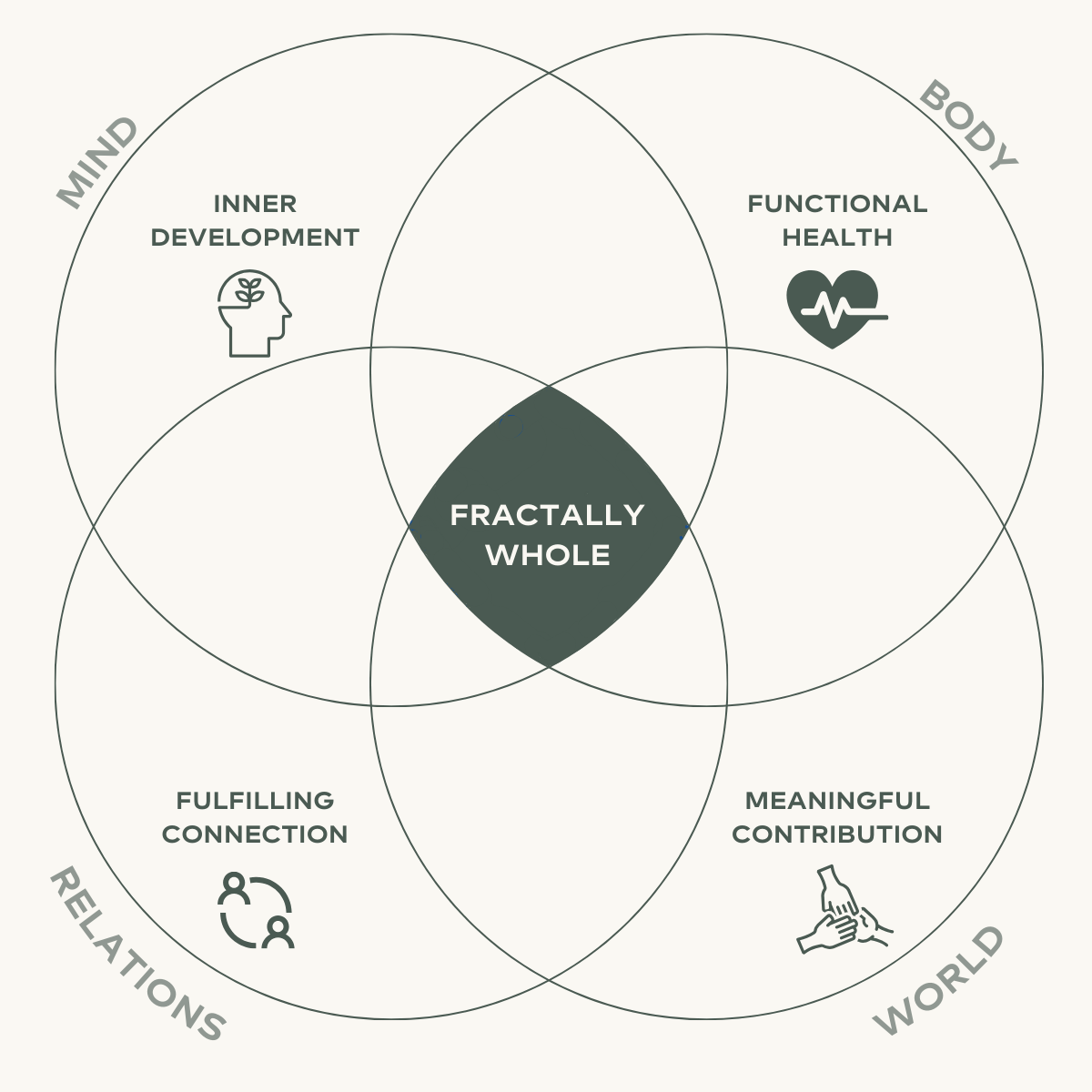
Just as I have always been drawn to thresholds, I have also been drawn to the intersection between our inner development and what we enact in the world — how meaning, maturity, and consciousness shape what we build, how we lead, and what becomes possible through our collective efforts.
For more than two decades, this orientation expressed itself through integral organizational development: helping organizations align systems, structures, culture, and ways of working around a deep and worthy purpose.
I co-founded and grew organizations, stewarded complex initiatives, and spent twelve years in senior leadership at the Whidbey Institute, a place-based transformative learning center on 106 acres on Whidbey Island, north of Seattle.
And yet, again and again, I witnessed the same painful pattern.
People leading generative, values-driven work were doing so at profound personal cost — driving themselves physically, mentally, emotionally, and relationally into the ground. Leaders were isolated and lonely, often treated (implicitly or explicitly) as sources of extraction in service of the mission. The gap between what the work stood for and how it was being done wasn’t just unsustainable — it was eroding life.
I was living inside that gap myself.
Despite deep competence in systems change, culture change, operations, adult development, finance, etc — building structures, stewarding culture, and strengthening institutional viability — I began to recognize that I had reached the edge of what these approaches alone could address.
I found myself drawn toward a deeper question: how do we engender conditions conducive to life — even while still embedded in systems shaped by extraction?
Around this same time, I developed a genuine passion for health — both as metaphor and as daily practice for my own well-being — alongside a broader cultural shift away from a narrow fixation on pathology and toward a more generative inquiry into how conditions for health are actually created. Across many fields, a deeper realization has been taking shape: reducing harm is not the same as cultivating aliveness.
I could feel this question everywhere. In our bodies. In our organizations. In our communities. At every level, we are being invited beyond a focus on what is breaking down, toward how we create conditions for life, vitality, and regenerativity.
Beyond the noise of all that is falling apart, something quite remarkable is also being born. I am for this. And I am for the people dedicating themselves to bringing it into form.
This recognition, eight years ago, led me into study and practice in health coaching and functional medicine — not as a departure from my earlier work, but as a continuation of it. I worked to become the integrative coach I had needed: someone able to support people as whole human beings, in the full complexity of their inner lives and outer responsibilities, as they dedicate themselves to meaningful work in the world.
Over time — and especially during my years at the Whidbey Institute — I found myself noticing deep, repeating patterns across contexts. Over the past fifteen years, this has included connection and practice across more than a hundred modalities, therapies, approaches, and wisdom traditions. While diverse in form, they point toward a remarkably consistent core movement: healing the habit of treating ourselves, one another, the planet, and existence itself as objects to manipulate, manage, control, or dominate — and learning instead to engage with inherent dignity, sovereignty, and care.
This orientation toward wholeness is often dismissed in Western contexts as “soft.” Yet lived experience and rigorous frameworks alike tell a different story. Even in highly competitive, outcome-driven environments such as American entrepreneurship, people who live from coherence, deep regard, and the capacity to learn from reality as it is consistently outperform those driven by fear, competition, and domination.
The objectifying, dominating way of being is not only harmful — it is also based on a false premise.
Grounded in this learning, research, and lived experience, I’ve developed a core approach that allows me to meet people in the specificity of their lives, challenges, and callings. Attuned, integrative, and whole-person, this approach is the foundation of Fractally Whole.
How I WorkI work by creating conditions — calm, caring, spacious, and generative — where people can think clearly, hear themselves beyond the noise of daily life, and engage what is actually in front of them. This is not a space that remains abstract. Alongside reflection and imagination, there is a steady orientation toward the particulars of life: what is possible now, what can be tried, and how something truly feels beyond the idea of it.
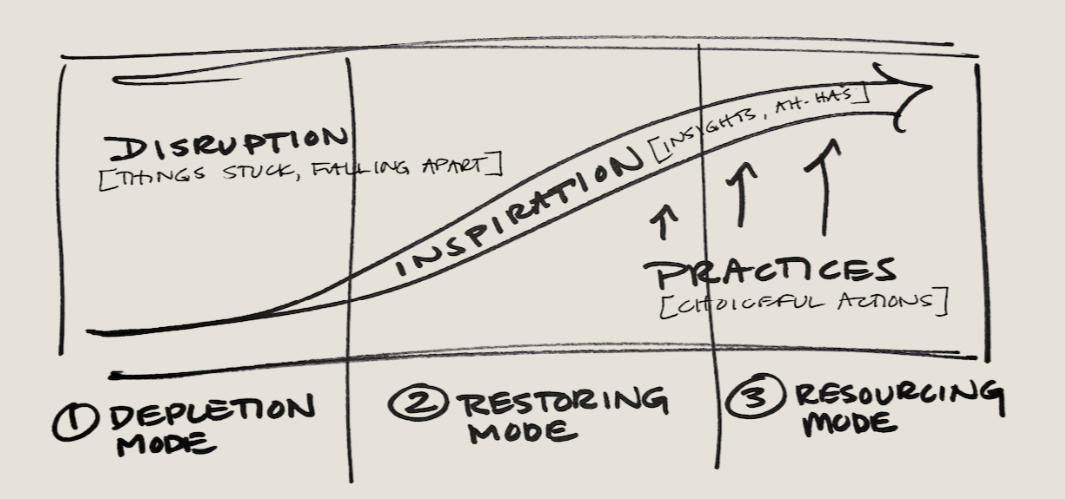
The work holds a bias toward action, experimentation, and learning by doing. Rather than pushing for certainty or dramatic leaps, we attend to the cascading effects of daily choices — grounded in the understanding that momentum and confidence grow from actions that are doable today. Energy is sustained when creativity is paired with action, feedback, and follow-through.
Because of these conditions, people often experience a meaningful generative shift beyond what they previously imagined possible. There is a renewed sense of efficacy and embodied confidence, a creative uplift, and a feeling of being back in authorship of one’s own trajectory. Insight leads to action, action invites new insight, and new capacities unfold.
While my background includes training in health coaching alongside professional and leadership coaching, I do not foreground “health coaching” as a discrete offering. Instead, a whole-person lens is woven throughout the work. Mental clarity, emotional resilience, and leadership capacity are deeply connected to how we sleep, nourish ourselves, move our bodies, and tend restoration. These foundations are rarely the headline — yet even small, conscious actions can support meaningful shifts across work, creativity, impact, and resilience.
This way of working fits best for self-accountable adults who are ready to grow and expand — and also ready for things to become easier. People willing to question old assumptions, try new rhythms and habits, and move forward with intention, curiosity, care, and genuine uplift.
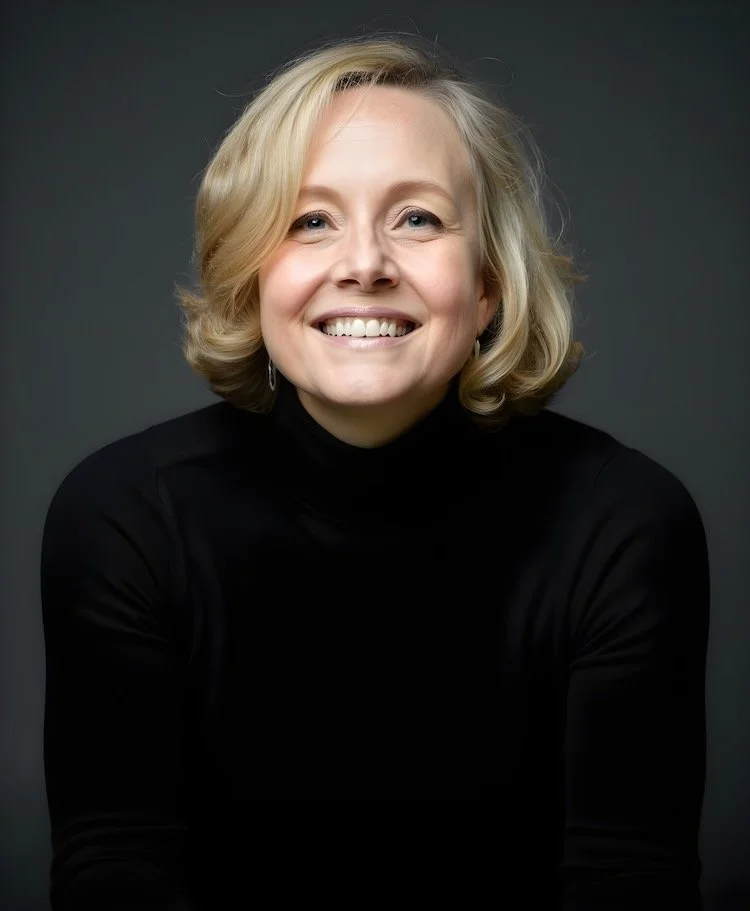
An Invitation...If what you’ve read speaks to you, I’d be happy to explore whether working together may be a fit.
We start with an initial dialogue — a chance to listen together, clarify what’s moving in your life or work, and discern whether this way of working would be supportive.
These conversations often lead to working together — and almost always bring clarity that’s useful in their own right.
Either way, it’s a grounded place to begin.